Executive Summary
- Plastic manufacturing involves complex steps beyond molding, including assembly, decoration, and packaging.
- American Plastics, a plastic manufacturing company in Arizona, streamlines this process by handling all production phases under one roof.
- Integrated logistics and drop shipping enable faster national distribution of finished goods.
The Surprising Complexity Behind Plastic Molding Supply Chains
Many companies searching for a plastic manufacturing partner often focus on the parts themselves and underestimate what happens afterward. Going from a plastic component to a ready-to-ship part requires coordination between multiple vendors who handle printing, assembly, packaging, and fulfillment. This can quickly introduce quality variances and tack on weeks of lead time.
American Plastics is an ISO 9001:2015-certified plastic manufacturing company. We provide our valued customers with a wide range of high-quality injection molding services, including assembly, decoration, filing, packaging, and drop shipping from our Arizona facility. Read on to learn more about the value of working with a single-source plastic molding company.
Get a Quote for Manufacturing Your Plastic Parts
Why Plastic Manufacturing Projects Often Involve More Steps Than Expected
Transforming a raw molded component into a market-ready product requires specific secondary operations, including mechanical assembly, surface decoration, and final packaging.
Bridging the Gap Between Raw Parts and Retail Products
Ensuring the final product meets performance and retail standards requires the following post-molding steps:
- From Part to Product: A raw part ejected from a press often lacks the necessary branding, safety labels, or mating components required for functionality. Most consumer goods are not single-piece items but complex assemblies that demand precise post-molding integration.
- Surface Decoration: Direct to object printing applies critical visual elements directly onto the plastic surface. This process ensures that safety warnings, logos, and usage instructions adhere permanently to the material rather than peeling off like standard stickers.
- Structural Assembly: Structural integrity often requires ultrasonic welding to fuse separate parts. Creating a permanent bond between two plastic halves ensures the final unit can withstand consumer use without relying on adhesives or mechanical fasteners.
- Kitting and Packaging: Retail distribution requires kitting, where the plastic unit is packed with instruction manuals and accessories. Completing this step immediately after assembly protects the product from damage and prepares it for immediate shipment.
Anticipating the True Scope of Production
Understanding the full production sequence helps companies anticipate timelines, costs, and quality control requirements before committing to a manufacturing partner.
How American Plastics Streamlines Plastic Part Production
American Plastics consolidates the entire plastic molding production chain (design and tooling, molding, and value-added assembly) into a single U.S.-based facility. This eliminates inter-vendor shipping, inconsistencies, and communication delays.
In-House Capabilities That Remove Logistics Barriers
As an ISO 9001-certified injection molder, American Plastics has in-house capabilities for ultrasonic welding, direct-to-object printing, screen printing, hot stamping, heat transfer labeling, product filling, and custom packaging. Our two facilities, located within one block of each other, handle overflow and specialized processes without requiring third-party logistics.
Parts transition directly from the mold to the finishing and packaging stations, avoiding the delays inherent in shipping components between separate facilities. Quality control stays consistent because the same team inspects parts at each production stage.
We do not require customers to use our injection molding services to qualify for assembly or packaging work. Companies can ship components produced by third parties to our facility for standalone finishing.
Reducing the Risks of a Fragmented Supply Chain
Fewer vendors means fewer delays, fewer invoices, and fewer opportunities for miscommunication about specifications or deadlines that can hamper production efficiency, erase profits, or derail projects entirely.
[Case Study] Optimizing the Production of Multi-Colored Toy Parts
American Plastics consolidated the molding, decoration, and packaging for a multi-component toy line. This integration eliminated color mismatches and significantly shortened the production timeline.
Solving Color Consistency and Lead Time Challenges
- The Challenge: A consumer goods manufacturer required a complex assembly involving distinct resin colors and strict retail packaging standards. The primary risk involved maintaining color consistency across separate production runs, as slight variations between batches would be immediately visible on the finished toy.
- The Process: Our team executed the entire lifecycle—molding, direct to object printing, and kitting—within a single facility. This proximity allowed quality control technicians to verify color matches between mating components immediately after molding, rather than discovering discrepancies during final assembly weeks later.
- The Outcome: Eliminating the handoffs between a molder, a printer, and a packager removed weeks of transit time from the schedule. The final units were labeled with retail-compliant UPCs and drop-shipped directly to distribution centers, bypassing the client’s warehouse entirely.
The Operational Advantage of Single-Source Accountability
Eliminating vendor handoffs prevents the delays and inconsistencies common in complex projects.
What to Expect When Starting a Plastic Manufacturing Project
The initial phase prioritizes technical validation and mold construction to ensure the part can be produced efficiently. This includes Design for Manufacturability (DFM), a strategic analysis that aligns the product’s geometry with the physical constraints of mass production.
Important Pre-Production Engineering Steps
- Design for Manufacturability: Before cutting steel, we review the CAD files to identify potential molding issues, such as draft angles or inconsistencies in wall thickness. Optimizing the design at this stage prevents expensive tooling modifications later.
- Tooling and Prototyping: We design and build the actual injection molds, ranging from single-cavity prototypes for testing to high-cavitation production molds. This step determines the part’s final quality and the daily production output.
- Material Selection: We assist in selecting the appropriate engineering-grade resin for the product’s intended use, including whether it requires UV resistance, flexibility, or high-impact strength.
Minimizing Unit Costs Through Early Optimization
Investing time in the engineering phase minimizes cycle times and reduces the unit cost of the final production run.
Frequently Asked Questions
Q: What is your injection molding press capacity?
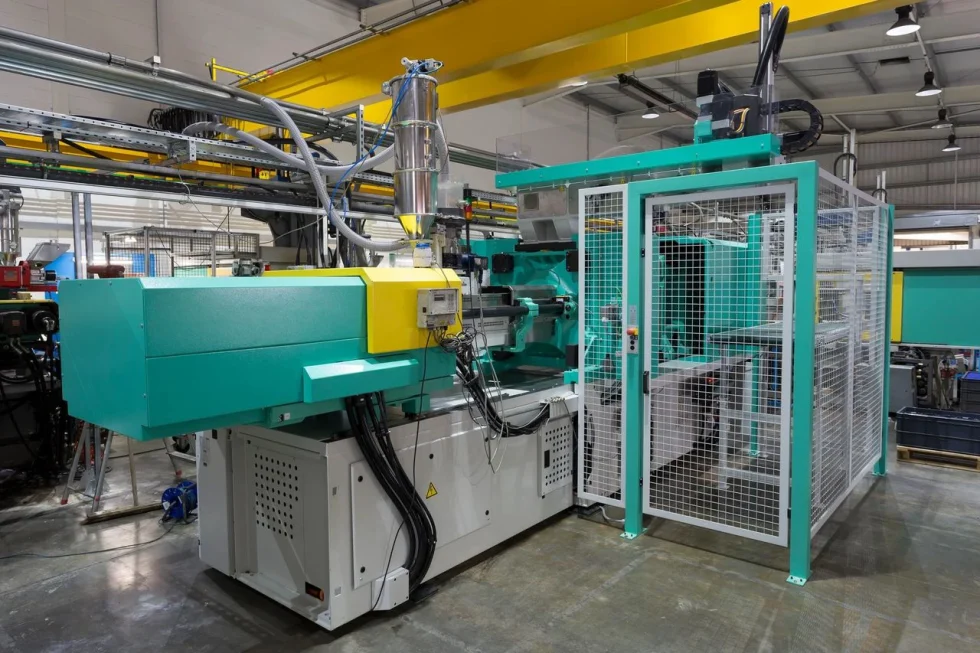
A: We operate a range of injection molding machines from 75 to 500 tons. This capacity allows us to produce everything from small, high-precision components to larger structural parts.
Q: Do you offer insert molding services?
A: Yes, we perform insert molding, which involves injecting plastic around a pre-placed metal or non-plastic component to create a single, integrated unit.
Q: What industries do you serve beyond consumer goods?
A: In addition to consumer products and toys, we manufacture components for the pet supply, electronics, and industrial sectors.
Q: Do you handle mold maintenance and repairs?
A: Yes, we perform routine tooling maintenance and minor repairs in-house. It helps ensure that molds remain in optimal condition and minimizes downtime during production runs.
Q: Can I transfer an existing mold to your facility?
A: Yes, we accept transfer tooling from other manufacturers. Our engineering team reviews and validates incoming molds to ensure they are compatible with our equipment before production begins.
Partner With American Plastics to Streamline Production
A plastic manufacturing company that handles the entire production cycle eliminates the complexity of managing multiple specialty vendors. Consolidating these steps under one roof shortens lead times and keeps quality control consistent across each phase.
At American Plastics, we can take your project from the initial mold design to the final delivery at a distribution center. We manufacture components for consumer goods, industrial, and specialty markets directly from our Arizona facility.
Click below for a quote and to learn more about our comprehensive plastic molding services.