Executive Summary
- Proactive tooling transfers provide immediate relief from manufacturing partnerships that no longer meet quality, cost, or reliability standards.
- American Plastics has a proven, structured, and risk-mitigated approach to injection mold tooling transfers
- Selecting the right injection molding partner requires carefully evaluating technical capabilities and transfer expertise before committing your tooling.
Is It Time to Move Your Plastic Injection Mold Tooling?
Poor quality, rising costs, or inconsistent reliability signal it’s time to consider transferring your tooling to a new injection molding partner. Otherwise, ongoing problems with your current injection molding partner can compound over time, threatening operational stability.
At American Plastics, we handle tooling transfers through a proven risk-mitigated process that minimizes disruption and restores production stability. Our team manages every phase from initial assessment through full-scale manufacturing.
Read on to learn more about the tool transfer process and how to choose the right injection molding partner.
Get an Injection Mold Tooling Transfer Quote
Why Do Customers Move Tooling for Injection Moldin
There are many valid reasons why injection molding companies opt to move their tooling. The most common reasons for shifting injection mold tooling to a new service provider are extensive backlogs in PO processing, noticeable and unacceptable quality drops, incorrect materials, and lackluster communication.
Reasons To Move Your Injection Mold Tooling
The decision to move tooling typically traces back to one or more critical issues:
- Quality / Performance: The parts you’re receiving no longer meet dimensional specifications or surface finish standards. Reject rates are climbing, and output quality varies between production runs.
- Material Issues: Incorrect resin grades, incompatible material mixing, and unauthorized substitutions have become routine. Contaminated batches and incorrect additives start to compromise the structural integrity of your parts.
- Cost Reduction: Per-part pricing has become uncompetitive or continues to rise without clear justification. Hidden fees and excessive tooling maintenance charges are steadily eroding your profit margins.
- Capacity Constraints: Inadequate machine tonnage, limited production shifts, and a lack of specialized equipment prevent meeting your volume requirements. Infrastructure limitations prevent you from scaling production and meeting demand.
- Reshoring: Offshore manufacturing creates communication barriers, exposes you to tariff impacts, and significantly extends lead times. Recent reshoring trends indicate that more companies are bringing production back to the United States to regain control.
- PO Backlogs: Order volume has outpaced production capacity, and lead times have stretched from 4 weeks to 12+ weeks. Delivery dates are repeatedly missed, and unfulfilled orders continue to pile up.
When to Make the Move
Moving tooling means getting your parts made correctly, on time, and at a fair price. You’ll get reliable production rather than dealing with problems every month.
Transfer Your Injection Molding Tooling to American Plastics
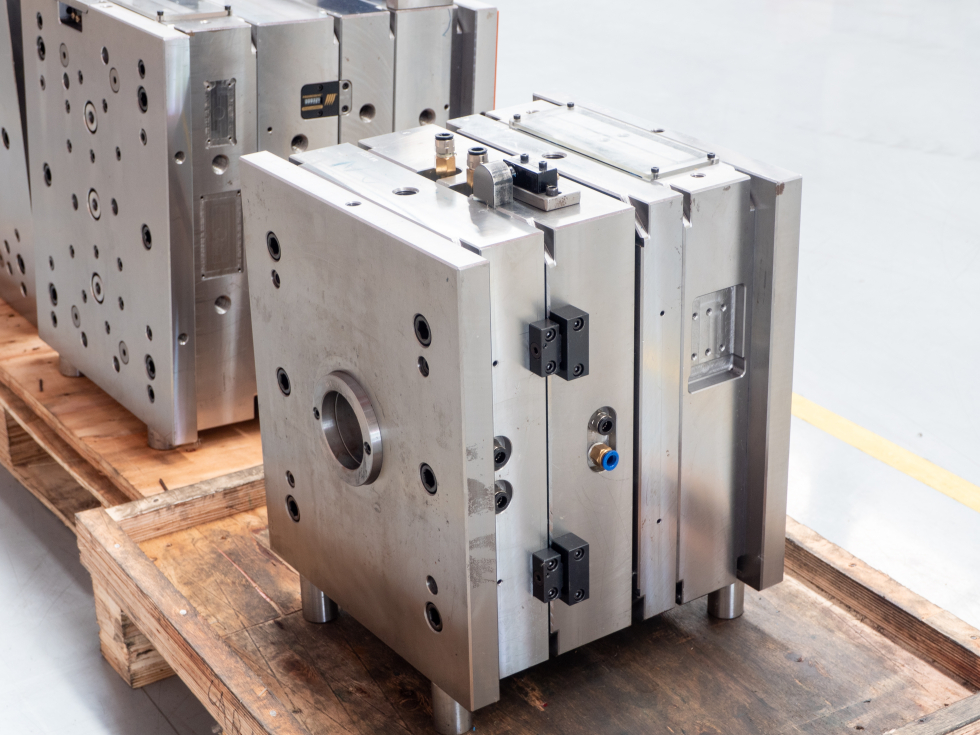
Transferring your injection molding tooling to American Plastics follows a structured four-step process that minimizes production disruption. Our team handles assessment, planning, execution, and production ramp-up to ensure your molds transition smoothly and maintain part quality:
Step 1: Tooling Assessment
We evaluate your existing molds to verify compatibility with our equipment and identify any necessary modifications. Our assessment covers mold condition, specifications, dimensional requirements, and material compatibility to prevent issues during production startup.
Step 2: Transfer Planning
American Plastics creates a detailed logistics and timeline plan that addresses transportation, installation scheduling, material procurement, and production continuity. This planning phase establishes clear expectations and coordinates all parties involved to avoid delays or miscommunication.
Step 3: Execution and Testing
Your molds are transported, installed, and tested through sample production runs to verify dimensional accuracy and part quality. We validate process parameters, cycle times, and quality metrics before authorizing full production release.
Step 4: Full Production
Once validation confirms everything meets specifications, your tooling enters regular production with ongoing quality inspections. Our team monitors performance and maintains documentation to ensure consistent output throughout the production lifecycle.
Avoiding Common Transfer Failures
A structured transfer process prevents validation failures and compatibility issues that delay production. American Plastics follows documented procedures that reduce risk throughout the transition.
What to Look for in a New Injection Molder?
Look for a plastic injection molder with the technical capability to handle your specific parts and the operational infrastructure to meet your volume requirements. Certifications, equipment capacity, quality systems, and communication standards are good indicators of whether a partnership will succeed in the long term.
Performing due diligence on the following factors helps you identify a reliable long-term partner:
Equipment and Technical Capability: Verify that the molder has the right press tonnage, auxiliary equipment, and technical expertise required for your part. Mismatched equipment causes quality problems and limits your ability to scale production.
Industry Certifications and Quality Systems: Confirm they hold certifications relevant to your industry, like ISO 9001. Our in-house quality control systems help to ensure consistent processes and documentation that meet regulatory requirements.
Production Capacity and Lead Times: Assess whether they can handle your current volume and accommodate growth without extended lead times. Overcommitted molders create the same backlog problems you’re trying to escape.
Communication and Transparency: Evaluate how responsive they are throughout the quoting process and whether pricing is clear, with no hidden fees. Poor communication during courtship gets worse after you’ve moved your tooling.
Choosing the Right Partner
A thorough evaluation upfront prevents you from trading one set of problems for another. The time spent assessing capabilities now saves you from another expensive tooling move later.
Common Mistakes That Can Complicate Tooling Transfers
Most tooling transfer complications arise from preventable oversights in planning and execution:
Incomplete Mold Documentation: Moving tooling without complete process parameters, material specifications, cycle times, and maintenance records forces the new molder to redevelop everything from scratch. This extends startup time and increases the risk of defects in parts during validation.
Skipping Pre-Transfer Mold Inspection: Failing to assess the mold’s condition before transport means discovering damage, wear, or needed repairs after it arrives at the new facility. This causes unexpected costs and delays when the mold requires refurbishment before it can run.
Inadequate Testing Before Full Production: Launching production without thorough sample runs and dimensional validation leads to scrapped parts and customer rejections. Proper testing identifies process adjustments needed before committing to volume production.
Poor Communication with Previous Molder: Unclear contractual terms or a hostile relationship with your previous molder can lead to withheld documentation, delayed releases, or damaged tooling during handoff. Getting legal and logistical details sorted upfront prevents these conflicts.
Preventing Costly Transfer Errors
These mistakes can turn what should be an otherwise straightforward transfer into an expensive disaster with missed deadlines. American Plastics anticipates these issues and addresses them proactively throughout the entire carefully managed transfer process.
Injection Mold Tooling Transfer FAQ
Q: How long does a typical tooling transfer take from start to full production?
A: Transfer timelines vary based on mold complexity and condition, but most transfers are completed within 4-8 weeks when proper documentation and planning are in place.
Q: Who owns the tooling during and after the transfer process?
A: You retain ownership of your tooling throughout the transfer, and contractual agreements should clearly define custody, liability, and usage rights at each stage.
Q: Can existing molds be modified or refurbished during the transfer?
A: Yes, the transfer process provides an opportunity to inspect, repair, or modify tooling to improve performance or accommodate new material requirements before production begins.
Q: My company is located in Arizona. Will American Plastics pick up my existing tooling for me?
A: Yes, we can negotiate the pickup details from your existing injection molding provider and transport the mold back to our facility for inspection, refurbishment, and start preparing for production of your plastic parts.
Transfer Your Tooling to American Plastics Today
Transferring injection mold tooling requires careful planning, thorough partner evaluation, and a structured process to ensure production continuity. At American Plastics, we manage every phase of the tooling transfer process to minimize disruption and deliver reliable manufacturing from day one. Click below to learn more and get a quote.